
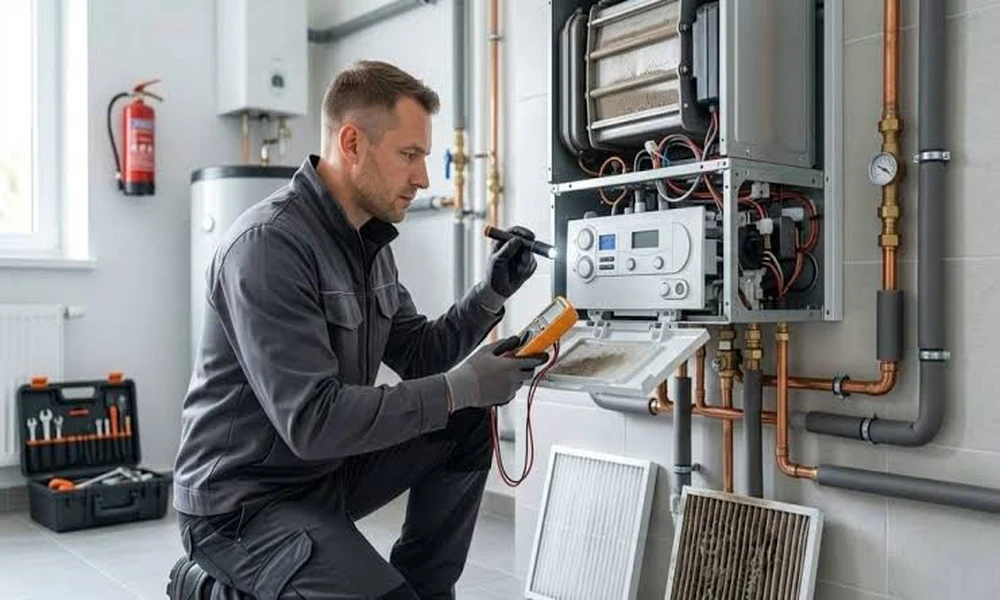
A dependable heating system helps keep a home comfortable when temperatures fall, but everyday wear can gradually affect its performance. Small faults may develop without obvious warning, leading to uneven temperatures, unusual noises or unexpected interruptions. Regular maintenance helps identify potential issues early and gives homeowners a clearer understanding of their system’s condition.
Heating equipment relies on several components working together, from thermostats and filters to electrical connections and air distribution systems. When these parts are neglected, minor problems can affect comfort, efficiency and reliability. Understanding common heating faults and arranging appropriate servicing can help homeowners reduce avoidable disruption and keep their systems operating as intended.
Dirty Filters and Restricted Airflow
Blocked or dirty filters are common causes of reduced airflow in forced-air heating systems. Dust and other airborne particles collect over time, restricting the movement of air through the equipment. Regular heating maintenance in Conway, AR can help identify clogged filters and other airflow issues before they affect comfort and system performance. Following the manufacturer’s instructions for checking and replacing filters helps maintain suitable airflow and supports reliable operation.
Regular servicing can also help identify obstructions in vents, registers and accessible ductwork. Furniture, dust accumulation or closed vents may interfere with air circulation, while leaks in ductwork can contribute to uneven heating. A technician can assess airflow problems and recommend appropriate corrections rather than assuming that the filter is the only cause.
Uneven Heating Between Rooms
When one room feels warm while another remains cold, the cause may involve more than the heating equipment itself. Poor insulation, draughts, blocked vents, duct leakage or an incorrectly configured thermostat can all contribute to temperature differences. Checking these factors can help identify whether the problem requires routine maintenance, adjustments or further investigation.
During a professional maintenance visit, the technician can inspect relevant components and check whether the system is distributing heat appropriately. Homeowners can discuss recurring cold spots and changes in comfort to help the technician identify the underlying problem. Addressing airflow or control issues may improve temperature consistency without requiring an immediate system replacement.
Thermostat and Control Problems
A thermostat tells the heating system when to operate, so incorrect settings or control faults can affect indoor comfort. A system that fails to start, stops too soon or maintains an unsuitable temperature may have a thermostat problem, although other equipment faults can produce similar symptoms. Homeowners should first check the selected temperature, operating mode and batteries if the model uses them.
Maintenance can include checking thermostat operation and confirming that the system responds correctly to its controls. The thermostat should also be positioned and used appropriately, following the manufacturer’s guidance. If the problem continues after basic checks, a qualified technician can investigate the wiring, sensors or other components without relying on guesswork.
Unusual Noises and Mechanical Wear
Heating systems often make some noise during normal operation, but sudden changes deserve attention. Rattling, grinding, banging or persistent buzzing may indicate loose components, airflow restrictions or mechanical and electrical faults. The meaning of a sound depends on the equipment, so homeowners should avoid assuming that every noise has the same cause.
Routine inspections can help identify visible wear, loose fittings and other developing problems before they cause further disruption. If a noise is sudden, severe or accompanied by a burning smell, smoke or repeated electrical trips, switch the equipment off if it is safe to do so and seek professional assistance. Never remove safety covers or attempt repairs on electrical or gas components yourself.
Ignition and Heating Start-Up Difficulties
Some systems struggle to start because of problems with ignition, sensors, electrical connections or fuel supply. A furnace that repeatedly starts and stops may also have airflow or overheating issues. Although a simple control setting can occasionally be responsible, recurring start-up failures should be investigated rather than repeatedly resetting the equipment.
A qualified technician can inspect the components relevant to the system type and check that it starts and operates safely. For gas-powered equipment, servicing should be carried out by an appropriately qualified professional. Regular inspections cannot prevent every fault, but they can reveal deterioration and help identify maintenance needs before a minor issue becomes a more disruptive failure.
Reduced Efficiency and Rising Energy Bills
An unexplained increase in heating costs may indicate that the system is operating less effectively, particularly if household routines and weather conditions have remained broadly similar. Dirty components, restricted airflow, control problems and inadequate maintenance can contribute to poor performance. However, energy prices, colder weather and changes in how the home is used can also affect bills.
Servicing helps assess the condition of the equipment and identify issues that may be affecting operation. Homeowners can support performance by following filter maintenance guidance, keeping vents clear and addressing draughts where practical. If costs remain unusually high, a professional assessment can help determine whether repairs, improvements to the home or eventual equipment replacement deserve consideration.
In Summary
Many common heating problems begin with restricted airflow, control faults, uneven heat distribution or components that need attention. Regular maintenance provides an opportunity to identify these issues, check safe operation and investigate changes in performance before they lead to avoidable inconvenience. It cannot eliminate every breakdown, but it can support more dependable heating and informed maintenance decisions.
Homeowners should follow the manufacturer’s servicing recommendations and contact a qualified professional when faults persist or safety concerns arise. By paying attention to unusual noises, inconsistent temperatures and changes in energy use, they can respond earlier and help maintain a comfortable home throughout the heating season.
======================================================================