
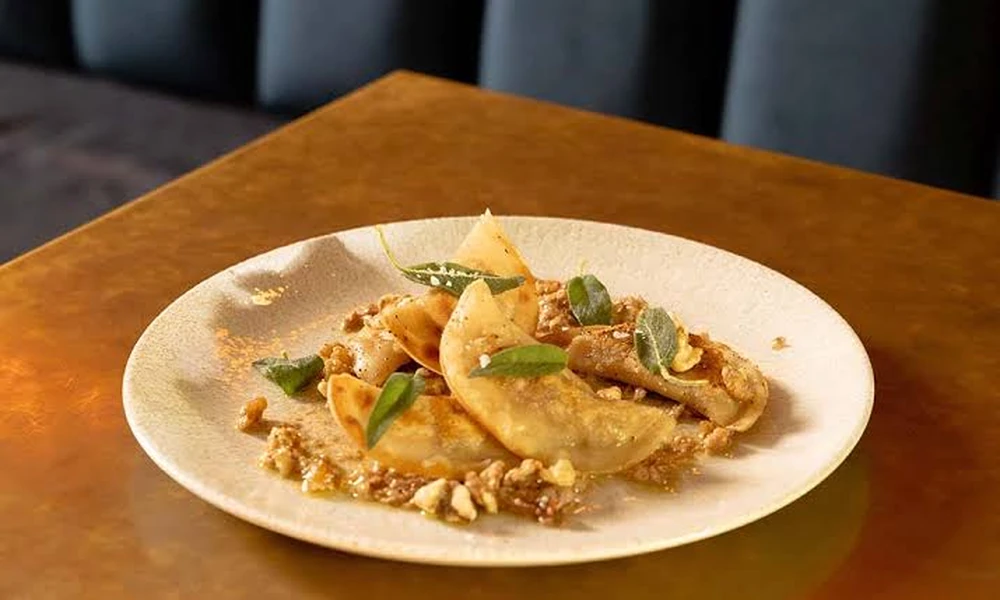
Serve dumplings, accompaniments and sauces as distinct components when that is how someone prefers to eat. Explain what is already inside the filling and let the person choose whether to combine anything else. A preference for separate foods can be accommodated through ordinary plating without turning dinner into a lesson about how someone ought to eat.
This approach is useful for both individual and shared meals. One person may enjoy mixing the whole plate, while another likes to taste each component separately. A clear arrangement can support both. Ask how the person would like the food arranged, then use that answer to choose the plate and any small dishes.
Let the filling provide the enclosed mixture
A dumpling already combines ingredients inside dough. That matters when someone wants to know exactly what will be mixed before they agree to eat it. Describe the filling plainly rather than assuming the outside appearance explains it. “Potato and cheddar inside” offers a clearer starting point than a general promise that it is a simple food.
Poppin’ Cheddar Bites contain potato and cheddar in a mini format. Those ingredients cannot be separated at the table in the way a side dish and sauce can. If that filling is acceptable to the eater, the rest of the meal can remain distinct. If it is not, choose another appropriate food instead of trying to disguise the combination.
Before shopping, a household can review the Bronx options from Holy Perogy and discuss the different filling descriptions. This lets the person choose based on what is inside rather than on the assumption that all dumplings contain the same mixture. The current package remains the source for detailed ingredient information.
Keep the conversation neutral. Ask which filling sounds suitable and accept the answer. There is no need to insist that a person try a second variety because the meal otherwise appears too plain. The purpose is to arrange a dinner they can enjoy, not to use the plate as a test of flexibility.
Keep the accompaniments distinct on the plate
Choose a plate with enough space to create visible separation. Put the dumplings in one area and the accompaniment in another, without draping a garnish across both. If the foods would run together, separate small dishes may be more practical than a larger plate with an arrangement that will not last.
Consider moisture. A heavily dressed vegetable side can spread liquid toward the dumplings even if the foods begin apart. Dress it separately or use a suitable dish when preserving that boundary matters to the eater. The solution should fit the actual food rather than rely only on an attractive initial arrangement.
Ask whether the person wants the side at all before making it part of their serving. A shared meal can include an optional accompaniment without requiring identical plates. Others may choose a larger amount or combine it with the dumplings. Those differences can coexist without turning the table into several unrelated menus.
Keep portions adjustable in a sensible way. A person who wants to try a small amount of a side can receive that amount without the host presenting it as a challenge. The important detail is that the component stays recognizable and available by choice, rather than being mixed in before the decision is made.
Offer sauce where it can be chosen
Place a sauce in a separate suitable dish if someone wants the option to dip or add it. Do not pour it over their food as a finishing gesture after agreeing to keep the components separate. A last-minute addition can undo the very arrangement that made the meal appealing.
Describe the sauce if its ingredients or flavor are unfamiliar. A person may prefer to taste a small amount before deciding whether it belongs with the filling. There is no requirement that the same condiment work for everyone. Keep the available choices modest and connected to what people actually want.
If no sauce is wanted, leave it off. A dumpling can be served without a decorative streak or drizzle merely to make the plate look styled. Keep any requested condiment within reach for the people who want it, while leaving the plain serving as the eater requested.
Where dietary requirements are involved, separate presentation alone may not be sufficient. Use the relevant package information and discuss the person’s needs rather than assuming that distinct dishes settle every concern. For example, an ingredient inside the dumpling remains there even when the sauce and vegetable are served in separate bowls.
Avoid interpreting preference as a problem
A person does not owe the table an explanation for enjoying separate components. Avoid jokes, comparisons or attempts to sneak ingredients into a dish to prove they will like them. Honest descriptions and ordinary choice make it easier to share dinner without making one person’s eating habits the entertainment.
Apply the same calm approach across ages. Small food is not automatically children’s food, and a preference for a plain finish is not limited to children. Let adults and younger eaters have appropriate choices within the household meal without attaching labels to the way their plates look.
Prepare the dumplings according to the actual package instructions. These products are sold frozen and uncooked, and presentation preferences do not change the preparation requirement. Once the food is ready, the plating decision can remain straightforward: distinct components, clear descriptions and optional additions.
Set the meal down with the separation intact, then let the eater decide what happens next. They may combine a bite, use the sauce or enjoy each part on its own. The host’s job is complete when the food is accurately described and comfortably arranged, not when everyone has made the same choices.