
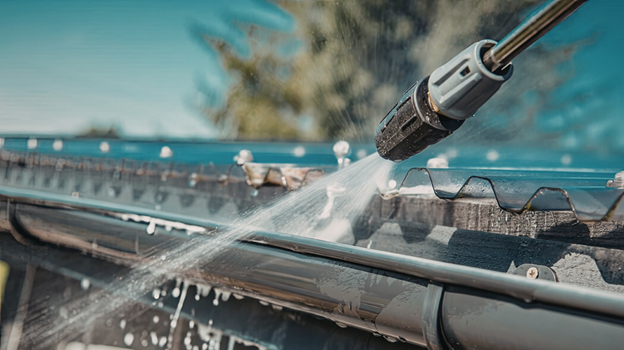
After the long, grueling months of winter, most homeowners are eager to focus on their lawns and gardens. We look for the first signs of green grass and blooming perennials, but we often forget to look up. In regions that experience heavy snow and ice, winter is the most physically demanding season for a gutter system. The weight of ice dams, the expansion of frozen debris, and the high winds of late-season storms can leave your home’s water management system in a state of disarray.
As the “April showers” approach, your gutters need to be ready to handle high-velocity runoff. A failure in the spring can lead to a flooded basement or rotted fascia boards by the summer. To ensure your home is protected, follow this 5-point spring gutter checklist to identify and fix problems before the rainy season hits its peak.
1. Clear the “Winter Sludge”
Even if you cleaned your gutters in the fall, winter has a way of depositing a fresh layer of debris. Late-falling leaves, pine needles, and—most importantly—shingle granules often accumulate during the winter months. When these mix with melting snow, they create a heavy, thick “sludge” that settles at the bottom of the gutter.
This sludge is particularly dangerous because it doesn’t just block water flow; it traps moisture against the metal or vinyl, accelerating corrosion and adding significant weight to the system. Starting your spring maintenance with a thorough manual cleaning ensures that the “veins” of your home’s drainage are clear.
2. Inspect the “Pitch” and Alignment
Gutters are not meant to be perfectly level. They are designed with a subtle slope, or “pitch,” that uses gravity to move water toward the downspouts. Usually, this is a slope of about 1/4 inch for every 10 feet of gutter. During the winter, the sheer weight of ice can cause the metal to bend or the hangers to pull away from the wood, resulting in “sagging” sections.
After cleaning, take a garden hose and run water into the end of the gutter furthest from the downspout. Watch how the water travels. If you see water pooling in the middle or if it moves very sluggishly, your gutters have lost their pitch. Adjusting the hangers now will prevent “standing water” issues that attract mosquitoes in the coming months.
3. Check for “Seam Stress” and Leaks
Ice is a powerful force. When water gets into a tiny crack in your gutter sealant and freezes, it expands, forcing the seam apart. This is especially common at the corner miters and the end caps. In the spring, you may find that seams that were watertight in November are now dripping steadily.
Examine the underside of your gutters for “tiger striping” or calcium deposits, which indicate that water has been leaking through a joint. If you find gaps, you will need to scrape away the old, brittle sealant and apply a fresh, waterproof bead. If the task of climbing a ladder and identifying these hairline fractures feels overwhelming, searching for gutter maintenance near me can connect you with a professional who can perform a pressure test and reseal your system effectively.
4. Secure the Hardware
The “hidden hangers” or spikes that hold your gutters to the house are under constant tension. Winter winds and the “freeze-thaw” cycle can cause these fasteners to back out of the fascia board. Walk the perimeter of your home and look for any “gaps” between the back of the gutter and the wooden board it sits against.
If you see a gap, the gutter is no longer supported. This allows water to drip behind the gutter and directly onto your siding or into your soffits. Use a drill or hammer to tighten loose fasteners, but be careful—if the wood is soft or rotted, the fastener won’t “bite,” and you may need to relocate the hanger or replace a section of the fascia board.
5. Verify Downspout Clearance
The final step in your spring checklist happens at ground level. Check your downspouts for clogs—often, a “plug” of leaves gets stuck in the elbow during the spring thaw. Once the pipes are clear, ensure the extensions are still attached and directing water at least six feet away from your foundation.
Winter snow removal or high winds often knock these extensions loose or crush them. If a downspout is discharging water directly into a flower bed or against the foundation wall, you are at risk for basement seepage. Ensure the discharge area is clear of debris and that the soil hasn’t eroded into a “bowl” that traps water against the house.
Spring is a season of renewal, but for a homeowner, it should also be a season of vigilance. Your gutters have just survived several months of the most difficult weather conditions possible. By taking an hour on a Saturday to run through this 5-point checklist, you can catch minor issues—like a loose hanger or a separated seam—before they turn into major structural repairs. A little proactive care in the spring ensures your home stays dry and protected throughout the rest of the year.