
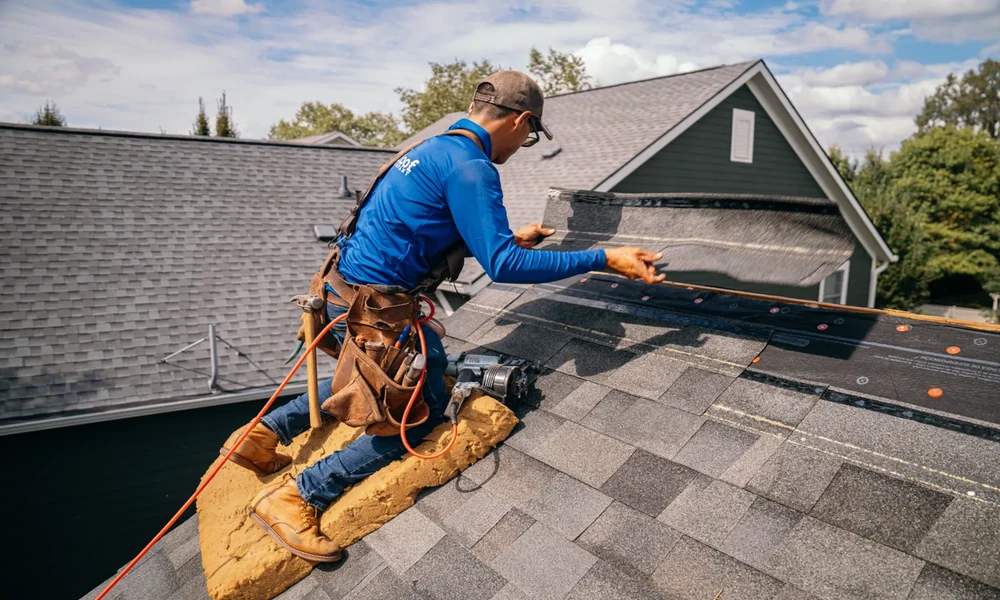
Spend a weekday morning driving through the neighborhoods off Fairview Road or out toward Five Forks and a pattern starts to show. A roll-off dumpster sits in one driveway, a ladder truck is parked two doors down, and by Friday a third house on the same street has a crisp new roof that makes its neighbors look a little tired. That is no coincidence. Much of Simpsonville was built in a hurry between the late nineties and the late 2000s, and the roofs on those houses all started their clocks at about the same time.
Knowing where your own roof sits on that clock is the hard part, and a free inspection is an easy way to find out. The crew behind refinedroofingco.com, a locally owned roofing company in Simpsonville led by owner Mark, offers no-obligation estimates and works on everything from a single cracked pipe boot to full tear-offs, metal roofs, gutters, siding and storm claims throughout Greenville County.
Whether you call someone this month or next year, it helps to understand how a builder-grade roof ages. It almost never fails all at once. It wears out in stages, and each stage leaves its own evidence.
Where the Builder Saved a Few Dollars
Production builders work on tight margins and tighter schedules. A subdivision might see dozens of roofs go on in a single season, and the specifications are written to pass inspection and close the sale, not to last forty years. The shortcuts tend to repeat from house to house.
- Three-tab shingles or entry-level dimensional shingles with modest wind ratings
- Drip edge skipped along the rakes or installed only at the eaves
- Standard felt underlayment in the valleys instead of a self-adhering membrane
- Box vents scattered across the roof without enough soffit intake to feed them
- No kickout flashing where a lower roof edge meets a sidewall
None of these are visible on move-in day, and most cause no trouble for years. They simply set the pace for everything that follows.
Years Eight Through Twelve, When Rubber Gives Up First
The earliest failures usually have nothing to do with shingles. The rubber collars around plumbing vent pipes, called pipe boots, sit in full sun all day and start to crack long before the roof around them is worn. A small brown ring on a bathroom ceiling or a drip in the attic near a vent stack is the classic sign.
Sealant around flashings dries out on a similar schedule, and nail pops begin appearing as lumber shrinks and poorly driven nails push up through the shingle above them. Each of these is a minor, inexpensive repair when caught early. Ignored, they let water soak into the decking for seasons before anyone notices a stain indoors.
The Middle Stretch and the Gutter Test
Somewhere past year twelve, the shingles themselves start talking. The simplest check involves no ladder on the roof at all. Look inside the gutters or at the ground below a downspout after a hard rain. A layer of coarse, sandy grit means the protective granules are washing off, and the asphalt beneath them is starting to bake in the sun.
Three-tab shingles often begin to curl at the corners or cup in the middle during this stretch. Tabs that have lost their seal will lift and flap during the strong thunderstorms that roll across the Upstate every spring and summer, and every lift weakens them a little more. Hail adds its own wear, even when a single storm seems harmless.
Attic ventilation plays a larger part here than most people expect. When hot air cannot escape, the underside of the roof deck cooks all summer, and the shingles age from below as well as above. A roof with poor airflow can look a decade older than one built the same year with balanced vents.
Decision Years Arrive Sooner Than the Label Suggests
The packaging on many builder shingles promised twenty-five or thirty years, but that number describes a manufacturer’s limited warranty, usually prorated, rather than real performance in a hot, humid climate. The home inspectors’ association InterNACHI puts typical three-tab shingles at around 20 years and architectural shingles at around 30 in its life expectancy chart. A roof installed in 2004 is now well into that window.
The repair or replace question usually comes down to how widespread the trouble is. A few isolated problems on otherwise flexible shingles are worth fixing. Widespread granule loss, several leaks in different spots, or shingles so brittle they crack when lifted point the other way, partly because repairs on brittle roofing tend to damage the shingles around them. Spending real money patching a roof with two summers left often just delays the bigger bill.
Getting the Second Roof Right
A replacement is the one moment when every shortcut from the original build can be corrected, which makes the scope of work more important than the shingle brand. A full tear-off lets the crew inspect the decking, and on many older subdivision homes the oriented strand board along the eaves has swollen from years of minor moisture and needs to be replaced in sections.
From there, the details that were skipped the first time can be done properly. New drip edge belongs along every edge, and a self-adhering membrane should line the valleys and the areas around chimneys and skylights. Ventilation can be rebalanced, often with a continuous ridge vent paired with clear soffit intake. Flashing should be replaced rather than reused, kickout flashing added at sidewalls, and pipe boots upgraded to longer-lasting designs. Even the nailing pattern matters, since high-wind installation methods call for more nails per shingle placed in the correct zone.
Material choices have also widened since these neighborhoods were built. Architectural shingles are now the baseline, impact-resistant shingles hold up better against hail, and metal roofing has become a common choice for homeowners who would rather not repeat this process in another twenty years.
When the Whole Street Hits the Same Birthday
Because neighbors share a roof age, they often share the same moment of decision, and that brings a few wrinkles of its own. Many homeowners associations require architectural approval for shingle color before any work starts, so submitting the request early keeps the schedule from stalling. After a major hailstorm, out-of-town crews tend to arrive and knock on doors along an entire street at once, which is a good reason to confirm any contractor’s state license and local track record before signing anything.
Insurance deserves a conversation too. Some carriers look closely at roof age when writing or renewing a policy, and a few settle claims on older roofs differently than on newer ones. A quick call to your agent before the roof reaches the end of its life can prevent surprises later.
The houses in these neighborhoods were built to the same plans, but they have not all aged the same way. Shade, attic airflow and plain luck have given some roofs a few extra years and taken a few from others. Looking at your own roof on its own terms, rather than waiting for the dumpster to show up next door, is still the surest way to replace it on your schedule instead of the weather’s.