
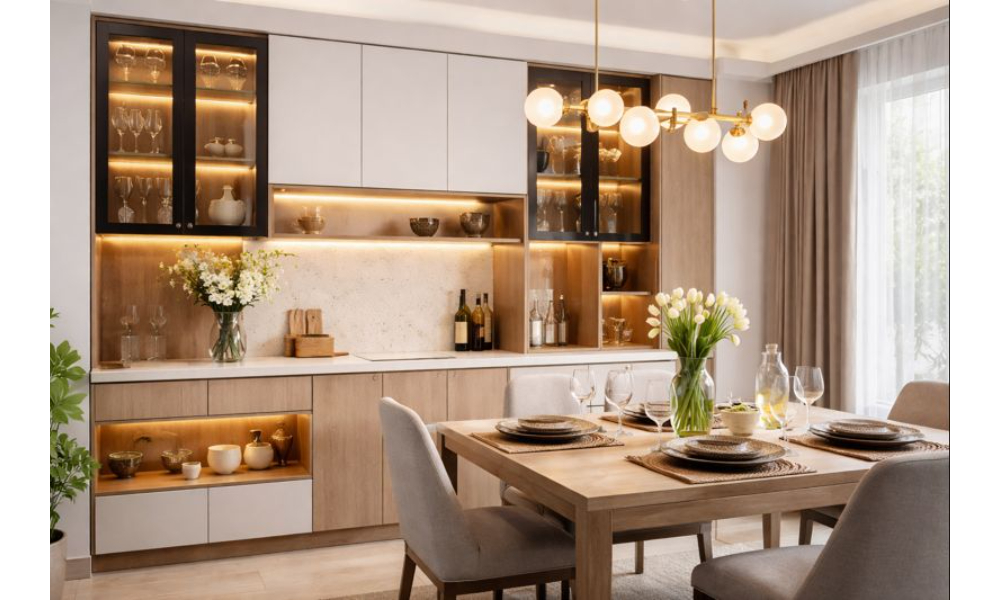
Modern-day dining areas are much more than a place to eat. They reflect the owner’s style and personality while providing a curated experience for the guest. A beautifully constructed crockery unit is a key element of a modern dining area, as it maintains order and adds sophistication and definition to the environment.
What Is the Purpose of a Crockery Unit?
A crockery unit provides the homeowner with many benefits beyond just a storage place. It can help to keep the homeowner’s dining must-haves in a tidy fashion; reduce clutter in the dining area; and add a visual interest point to the dining room.
Crockery units can also be integrated into apartment-style living or used within larger home settings, depending on their design.
Crockery units will serve many functional functions within the home, including:
- Storage of crockery, cutlery, serving ware, etc.
- Showcasing decoratives / glassware
- Separation of open-concept spaces (e.g. dining / kitchen)
Crockery Unit Styles
Wall-Mounted Crockery Units
Wall-mounted crockery units are perfect for modern-day living where there is limited space. These units create a modern, floating feel, while also having ample storage / display space available.
Full-Height Crockery Cabinets
Tall crockery units give the maximum amount of storage and are a great fit for homes with larger dining rooms. By utilizing streamlined lines and uniform finishes, these pieces create defined areas without making the overall look of the room feel overbearing.
Sideboard-Style Crockery Units
Low-height crockery units are a great alternative for use in open concept dining spaces. With storage capacities for a variety of items, each crockery unit is designed to facilitate ease of use while providing an open and expansive feel.
Finish and Material Selection
Finishes for crockery units significantly impact their overall look. Matte and lightly textured finishes will produce a more sophisticated and contemporary look, while glass-fronted cabinets provide a lightweight, attractive option for displaying goods. Woodgrained finishes give the unit a warmer feel, which counterbalances the rigid lines of contemporary minimalistic styles with the comfort of traditional design elements.
Utilizing consistent finishes between crockery units and dining furniture will produce visual harmony throughout the dining space.
Smart Planning for Display and Storage
The most effective crockery units provide an equal balance between open and closed storage. Closed storage should house day-to-day items out of sight while, in contrast, open shelving or glass-fronted sections should highlight valuable crockery and accessories.
Key storage features include:
- Adjustable shelving for maximum versatility
- Drawer storage for linen and cutlery
- Glass-fronted sections for elegant display
An effective internal assemblage allows ease of use without overwhelming clutter.
Lighting for Improving Aesthetic Appeal
Lighting enhances both the look and functionality of crockery units. The internal lighting of display cabinets produces an elegant, soft glow, while the strategic use of concealed LED lighting strips creates a more sophisticated atmosphere without overpowering.
Creating a Cohesive Dining Environment
A modern crockery unit should harmonize with the dining rooms’ general style, décor, and colour scheme. Selecting no more than two or three compatible finishes ensures continuity and balance throughout the dining room. Royale Touche produces durable, refined, laminate product collections that allow for ongoing development in both the aesthetic quality and cohesiveness of the dining room.
Summary
Modern crockery units are core components of well-designed dining rooms. The ability to maximally utilise layout space, along with the use of high-end materials, may elevate the visual appeal of a crockery unit and its functionality. Well-designed crockery units will enhance the experience of everyday dining as well as integrate in harmony within contemporary designed dining rooms.